The story read aloud, to listen to while viewing the place.
Video guide
Images of the place with the story and subtitles.
Sign language
The story translated into Italian Sign Language by an interpreter.
The farmhouse of Torcito has its roots in the early Middle Ages, in an area known in ancient times as Cerceto, a Roman name that indicated a place rich in oaks. The antiquity of the site is confirmed by the presence of the Via Traiano-Calabra, a Roman military road that connected Brindisi to Otranto. Additionally, a crypt and tombs carved into the rock have been found, dating from the 8th to 9th century, linked to a settlement of Greek-Italian rite monks.
Over the centuries, the farmhouse was part of an important feudal estate, belonging to numerous noble families. The strategic position of the farmhouse, along the Lecce-Otranto routes, made it a significant agricultural and spiritual center.
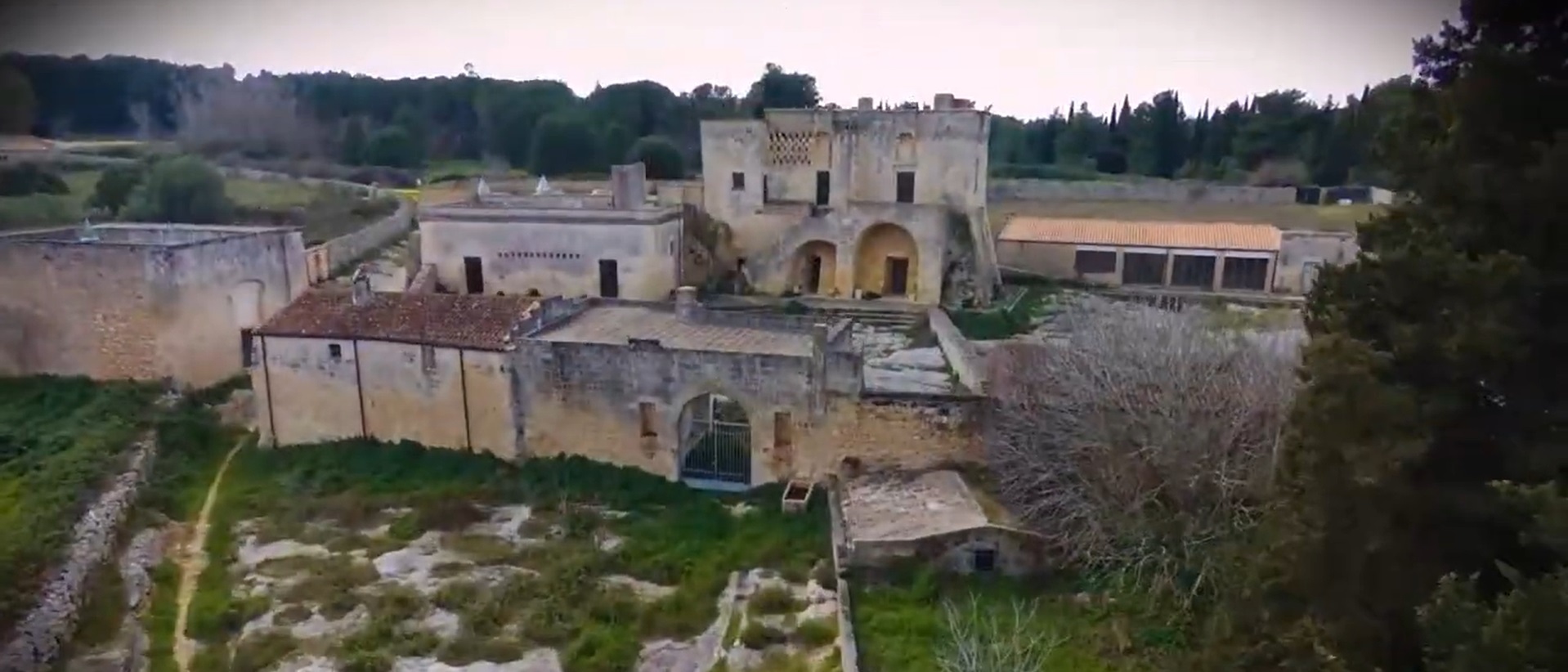
The Masseria Torcito, the central nucleus of the farmhouse, originated as a dwelling for farmers in the 12th century. Its transformation occurred in the 15th-16th century, following the Turkish incursions that culminated in the capture of Otranto in 1480.
It is very likely that during this period, the Masseria of Torcito, from a simple farmer's residence, transformed into a Fortified Masseria. Indeed, walls were built or raised, and the first floor was constructed, accessible via a ladder from a hatch located in the ceiling of the ground floor.
Once the threat of attacks and enemy incursions ceased, the Masseria underwent numerous modifications. First of all, external stairs were built to facilitate access to the upper floor. On the southern side of the building, new structures were added: the barn, the stable, the oven, and other rooms for the shelter of animals and shepherds were erected around the Masseria. A small church dedicated to St. Vito was also built.
Various activities revolved around the Masseria: pigeon breeding, olive milling in the nearby hypogean oil mill, and snow collection during the winter, evidenced by the existence of two semi-hypogean ice houses.
Images
Images of CASALE DI TORCITO (Cerceto)
Arrows to scroll, plus and minus to zoom, Esc to close.