The story translated into Italian Sign Language by an interpreter.
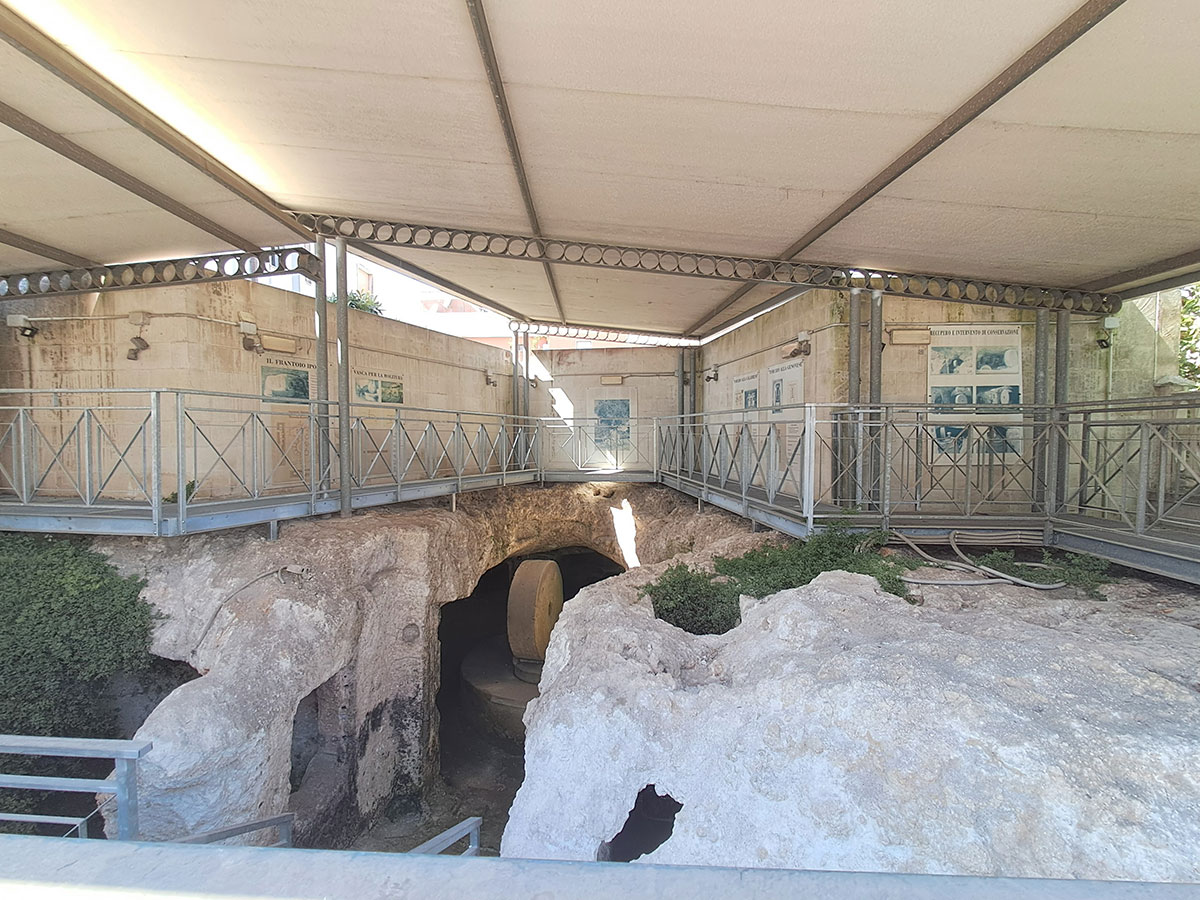
The Hypogean Oil Mill of Martano (also known as the San Blasi mill) located on Via Alcide De Gasperi is one of the most significant testimonies of the traditional olive oil culture of Grecìa Salentina. Entirely carved into tuff and situated below ground level, it represents a typical example of a hypogean oil mill from the 16th century, a period during which the production of lamp oil in Salento experienced strong expansion, fueled by the demand from Mediterranean markets.
It took advantage of the constant temperature of the subsoil, ideal for the preservation and processing of olives.
It features a large central basin with the perfectly preserved grinding stone. Original lighting was provided by oil lamps and small holes for ventilation carved into the rock, which allowed for air exchange without compromising the thermal stability of the environment.
The workers, called "trappitari," lived confined in the mill from October to March, working continuously for months without returning to their homes. They did not simply work; they inhabited the mill, sharing it with the pack animals that operated the millstone. They slept on improvised bedding, ate near the fire, and spoke little. The outside world was far away, reachable only during holidays. The confinement was not a prison, but a necessity: to protect production, ensure continuity, and maintain the secrecy of the processing cycle.
Images
Images of Frantoio Ipogeo
Arrows to scroll, plus and minus to zoom, Esc to close.