


Healthcare facility Tricase
Ospedale Tricase
Accessibility
-
Mobility impairment
Fully accessible level 5 out of 5
-
Visual impairment
Accessible with help level 3 out of 5
-
Hearing impairment
Accessible with help level 3 out of 5
-
Cognitive disability
Accessible with help level 3 out of 5
-
Older adults and reduced mobility
Fully accessible level 5 out of 5
- Access ramp : available
- Lift or stairlift : available
- Accessible toilet : available
- Reserved parking space : available
- Step-free entrance : available
- Tactile guide path (LOGES) : not available
- Tactile map or model : not available
- Braille signage : not available
- Rest area : available
- Audio guide available : not available
- Italian Sign Language (LIS) video : not available
- Subtitled content : not available
- Hearing loop : not available
- Easy-read signage / AAC : not available
- Drinking water point : not available
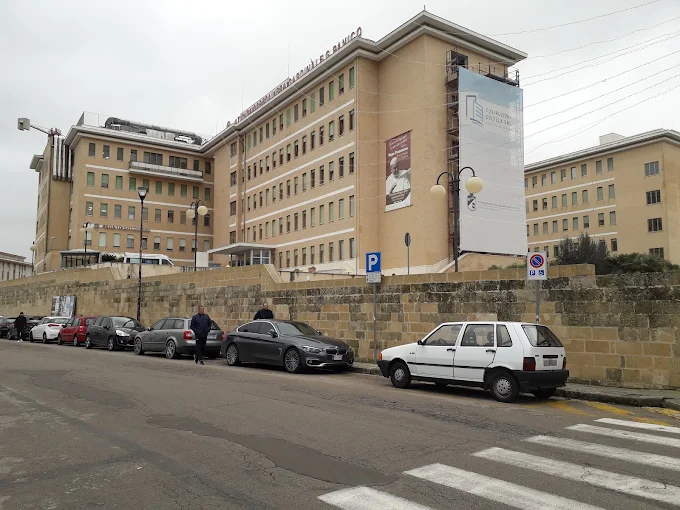
Cardinale G. Panico Hospital – Tricase
The Cardinale G. Panico Hospital in Tricase is an important healthcare facility in southern Salento, serving as a reference point for a wide area and numerous medical and surgical specialties. The structure offers diagnostic, treatment, and hospital assistance services, including an Emergency Room and various specialist pathways. Key areas of focus include cardiovascular, neurological, respiratory, and gastroenterological care, as well as services dedicated to women's health, maternity, and pediatric care. The hospital also plays a role in the regional oncology network through the Oncology Orientation Center (COrO), contributing to the management and guidance of patients along the care pathway.
1. It is an important healthcare reference in southern Salento
The Cardinale Panico Hospital is located in Tricase and serves a very large area of lower Salento. The reference health district includes 15 municipalities, including Tricase, Alessano, Castrignano del Capo, Gagliano del Capo, Specchia, Tiggiano, and Ugento.
2. It is a hospital with a wide range of specialized services
The facility includes numerous disciplines and clinical activities. ASL data on hospital admissions show that among the main areas of activity are cardiology and cardiovascular diseases, digestive system, respiratory system, nervous system, ophthalmology, otorhinolaryngology, and maternal-child health.
This is an interesting aspect to communicate as it reflects the image of a facility that does not serve a single specialized function but offers a comprehensive array of hospital services.
3. It plays an important role in oncological care
The Cardinale Panico is part of the regional oncology network and has an Oncology Orientation Center (COrO). The COrO serves as a reference point for guiding oncology patients within the care pathway.
The Puglia Region has also identified ecclesiastical entities, including the Panico in Tricase, as priority nodes in the regional oncology network.
4. The maternal-child sector is particularly significant
Among the hospital's activities are Obstetrics and Gynecology and Pediatrics. Data related to admissions in 2023 report over 1,200 admissions related to pregnancy, childbirth, and postpartum, and over 1,100 admissions related to the neonatal period.
This aspect can be highlighted in communication aimed at families.
5. It has an Emergency Room
Unlike the facility in Poggiardo, the Panico is part of the hospital network and has an Emergency Room, designated for managing emergency and urgent situations. The ASL distinguishes hospitals, which can be accessed directly through the Emergency Room in case of emergencies, from territorial PTAs.
6. There is a very wide range of diagnostic and specialist activities
The ASL Service Charter documents, among other things, activities in pathological anatomy and histopathological and cytopathological diagnostics, including biopsies, surgical specimens, and intraoperative examinations.
The Cardinale G. Panico Hospital in Tricase is an important healthcare facility in southern Salento, serving as a reference point for a wide area and numerous medical and surgical specialties. The structure offers diagnostic, treatment, and hospital assistance services, including an Emergency Room and various specialist pathways. Key areas of focus include cardiovascular, neurological, respiratory, and gastroenterological care, as well as services dedicated to women's health, maternity, and pediatric care. The hospital also plays a role in the regional oncology network through the Oncology Orientation Center (COrO), contributing to the management and guidance of patients along the care pathway.
1. It is an important healthcare reference in southern Salento
The Cardinale Panico Hospital is located in Tricase and serves a very large area of lower Salento. The reference health district includes 15 municipalities, including Tricase, Alessano, Castrignano del Capo, Gagliano del Capo, Specchia, Tiggiano, and Ugento.
2. It is a hospital with a wide range of specialized services
The facility includes numerous disciplines and clinical activities. ASL data on hospital admissions show that among the main areas of activity are cardiology and cardiovascular diseases, digestive system, respiratory system, nervous system, ophthalmology, otorhinolaryngology, and maternal-child health.
This is an interesting aspect to communicate as it reflects the image of a facility that does not serve a single specialized function but offers a comprehensive array of hospital services.
3. It plays an important role in oncological care
The Cardinale Panico is part of the regional oncology network and has an Oncology Orientation Center (COrO). The COrO serves as a reference point for guiding oncology patients within the care pathway.
The Puglia Region has also identified ecclesiastical entities, including the Panico in Tricase, as priority nodes in the regional oncology network.
4. The maternal-child sector is particularly significant
Among the hospital's activities are Obstetrics and Gynecology and Pediatrics. Data related to admissions in 2023 report over 1,200 admissions related to pregnancy, childbirth, and postpartum, and over 1,100 admissions related to the neonatal period.
This aspect can be highlighted in communication aimed at families.
5. It has an Emergency Room
Unlike the facility in Poggiardo, the Panico is part of the hospital network and has an Emergency Room, designated for managing emergency and urgent situations. The ASL distinguishes hospitals, which can be accessed directly through the Emergency Room in case of emergencies, from territorial PTAs.
6. There is a very wide range of diagnostic and specialist activities
The ASL Service Charter documents, among other things, activities in pathological anatomy and histopathological and cytopathological diagnostics, including biopsies, surgical specimens, and intraoperative examinations.
Did you find a different situation?
If what is described here does not match what you found, let us know: we will correct it.