The story translated into Italian Sign Language by an interpreter.
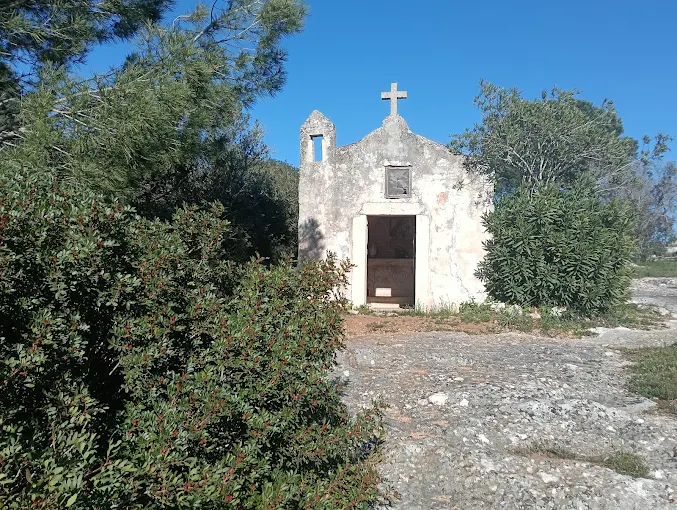
Outside the town of Palmariggi, near the small hill called Monte Juzzo, stands a small rock chapel commonly known as Madonna del Monte, slightly larger than a traditional votive shrine.
What strikes one about the exterior is its absolute architectural simplicity, devoid of decorative elements. The gabled facade features a sloping roof made of tiles and reeds, constructed according to the rural building techniques of the time. Completing the ensemble is an ancient bell tower, essential and evocative, which gives the structure a character of sober sacredness.
The chapel was probably built in the 16th century; following a collapse that reduced it to a ruin, it was rebuilt in its current form in the mid-19th century. It is dedicated to the Madonna di Costantinopoli, a title widely used in Salento with Byzantine tradition, and it houses a fresco that testifies to the persistence of the Greek rite and Eastern iconography.
Despite its small size and precarious structural conditions that led Bishop Morelli to prohibit worship there in the early decades of the 19th century, the place was never abandoned by the community. Popular devotion has continued to keep the bond with the shrine alive; even today, every first Tuesday of March, the day of the feast, the faithful reach the chapel in pilgrimage.
Nestled in the tranquility of the Palmariggi countryside, the chapel represents one of the most evocative places of the minor religious heritage of the area, a guardian of a devotional continuity that spans the centuries.
Images
Images of Chiesa di Santa Maria di Costantinopoli
Arrows to scroll, plus and minus to zoom, Esc to close.