Sign language
The story translated into Italian Sign Language by an interpreter.


Menhirs and dolmens Giuggianello
The data comes from on-site surveys. Where there is no survey, no judgment appears: we prefer to say we don't know rather than give you unverified information.
The level refers to one type of disability at a time. A place can be fully accessible for wheelchair users and completely unsuitable for those who are blind: that's why there is no single rating, and each type has its own evaluation.
Accessible with difficulties level 2 out of 5
Verified on 14/09/2026
Fully accessible level 5 out of 5
Verified on 14/09/2026
Fully accessible level 5 out of 5
Verified on 14/09/2026
Partially accessible level 3 out of 5
Verified on 14/09/2026
Partially accessible level 3 out of 5
Verified on 14/09/2026
Did you find a situation different from the one described?
Report a barrier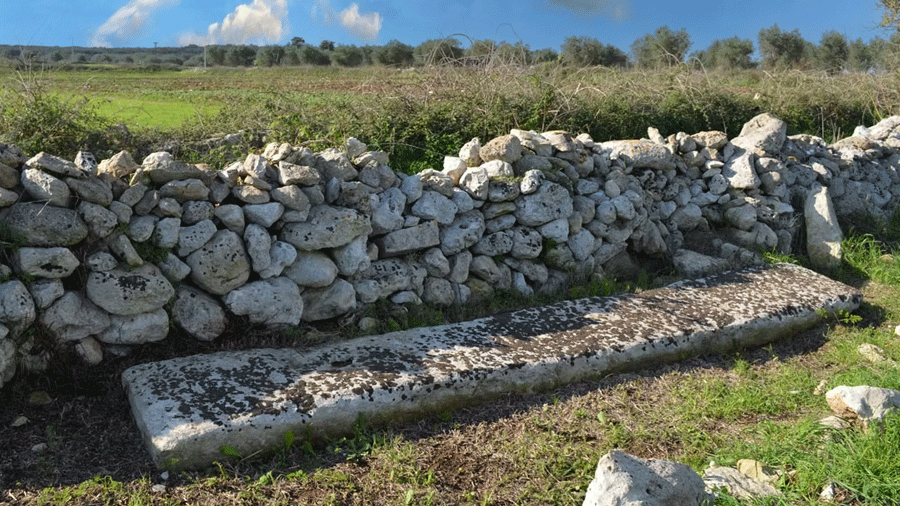
The story translated into Italian Sign Language by an interpreter.
Arrows to scroll, plus and minus to zoom, Esc to close.